Fragments
Overview
Fragments is a first-person analog/psychological horror game set in an ominous hotel, developed over a three-month school production at Campus ADN. I was responsible for the first section of Level 4 out of 6, which serves as the game’s high-intensity midpoint, where tension and pacing significantly escalate.
Summary
Eugene, an archivist, infiltrates the old residential wing of the Hotel LeBlanc. His goal is Apt. 206—the owner’s abandoned apartment. Hidden within its walls are elusive documents concerning his sister, Sarah, alongside fragmented Super 8 film reels waiting to be recovered and repaired.
ROLE: Level Designer and Assistant Lead Level Designer
GENRE: 1st Person Psychological Horror
YEAR: 2026
Intentions
- Immersive Realism & Environmental Storytelling
- High-Tension Pacing & Macro-Flow
- Ludonarrative Harmony
- Systemic Stealth
Constraints
- Unreal Engine 5. 6
- First Person
- Interior Environment Only
- No animation department
- Narrative based objectives
- Difficulty Level: High
- All enemy types (3) with a focus on The Anomalies
- Space Reuse
Top View 2D


Miro Board
Gameplay Beats
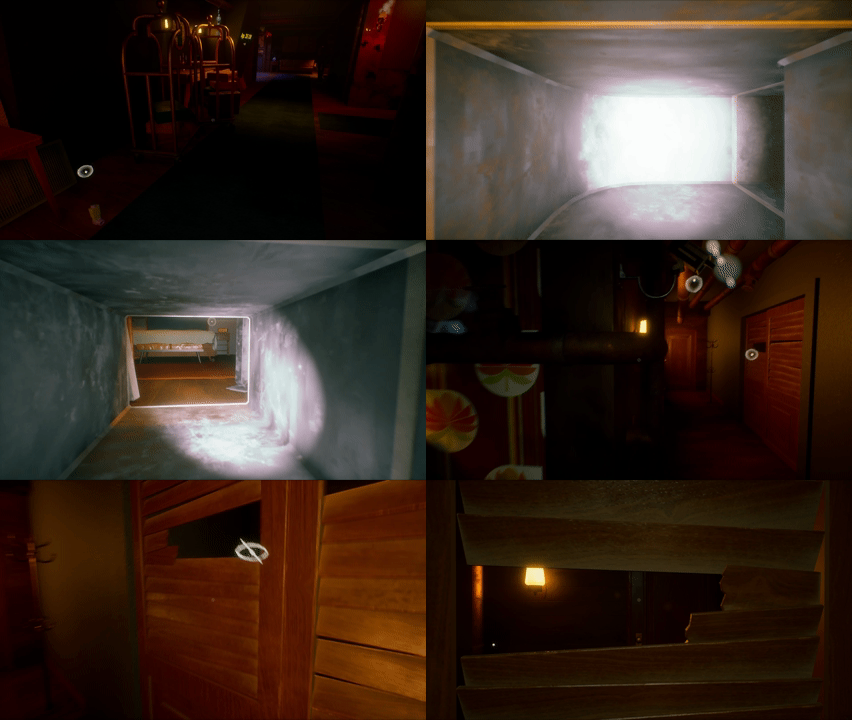
Beat #1 - Reach Mme. Leblanc's Room
The level opens with an immediate encounter against the Janitor, the game's systemic AI enemy. As this section represents the midpoint of the experience, I wanted to establish a high level of tension from the outset. The layout emphasizes player agency by offering multiple routes, hiding spots, and opportunities to evade the threat.
Intensity: 7/10
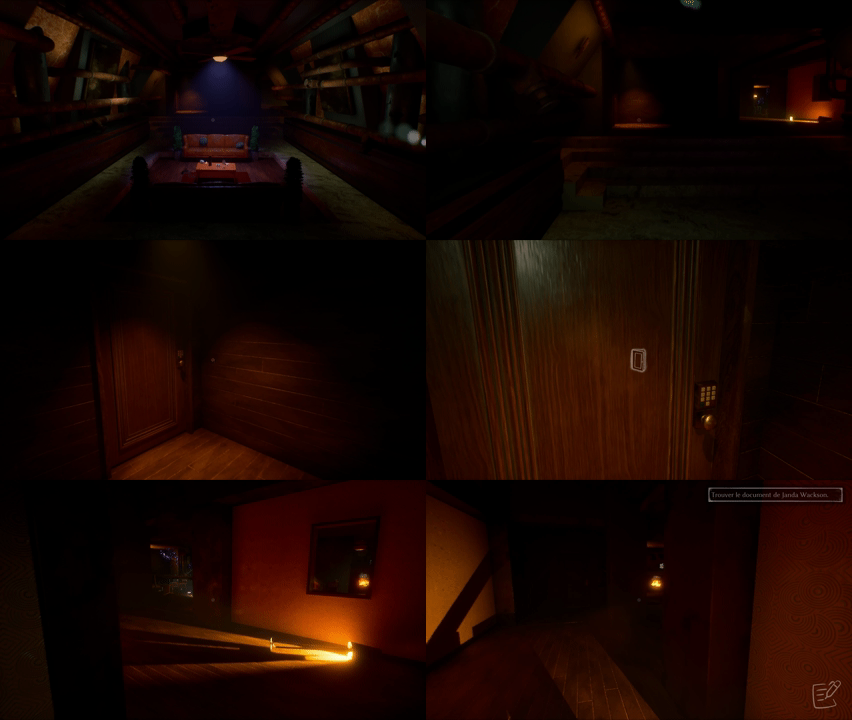
Beat #2 - The Entrance Room
Following the opening encounter, the players enter a safe space to recover and observe their surroundings. Lighting is used to guide the players' attention toward a locked door then, another path that leads deeper into the level.
Intensity: 2/10
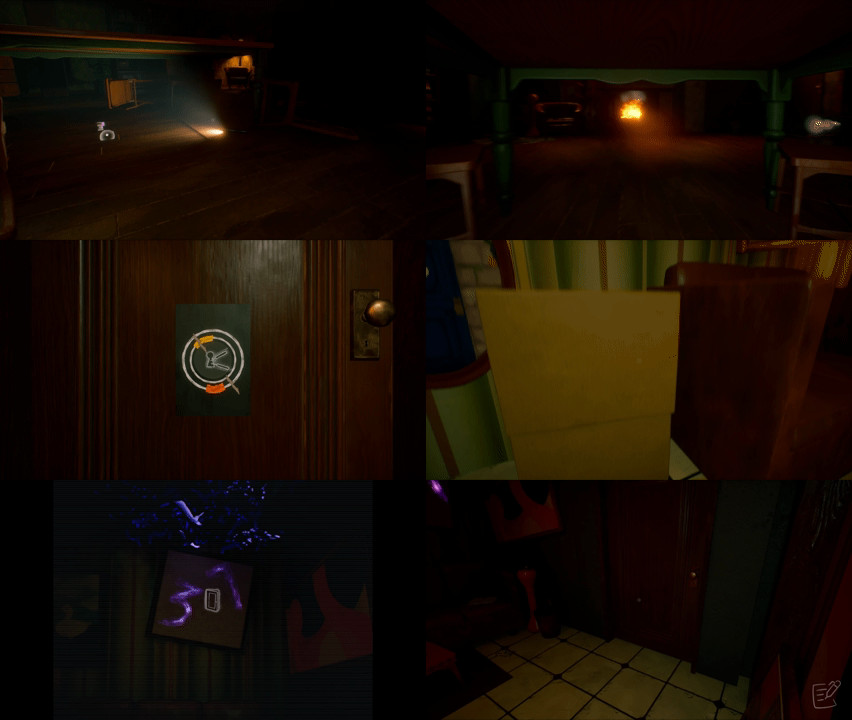
Beat #3 - The Dining Room Anomaly
To unlock the previously seen door, the players must reach the Smoking Room to reveal a code using their camera. To do so, they navigate around a patrolling Anomaly. Environmental cues, including a highlighted healing item beneath the table, subtly teach players that they can use the space below the dining table as a stealth route.
Intensity: 5/10
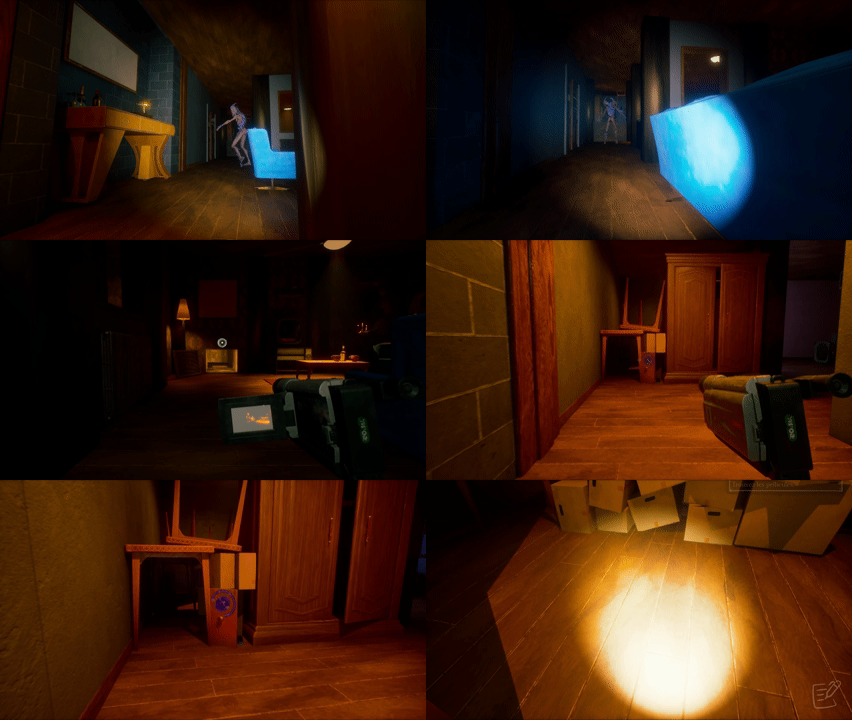
Beat #4 - The Anomaly Block (Tape 1)
The players enters a maze-like apartment structure inspired by Habitat 67. Repetitive modular spaces create disorientation and reinforce the protagonist's deteriorating mental state. By following the Anomaly's patrol route, the players discover the first of three tape fragments.
Intensity 6/10
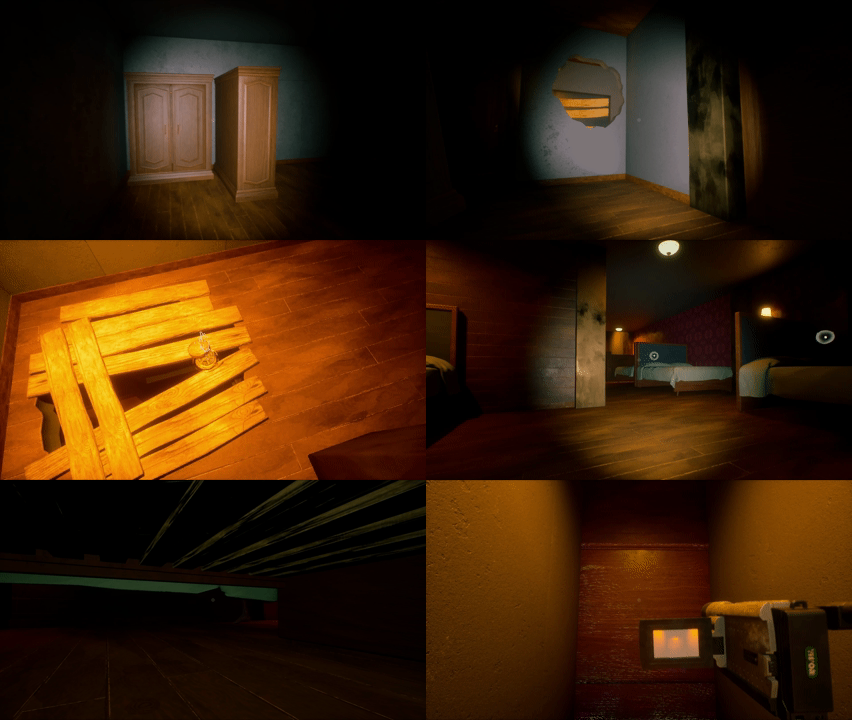
Beat #5 - The Anomaly Block (Tape 2)
The second floor introduces a dark navigation challenge that forces reliance on the flashlight, increasing tension without direct confrontation. The players then make their way to the 3rd floor and find a tape on the floor. A vent drops the players back to the 2nd floor. The player then enters a stealth-focused encounter where they must observe the Anomaly's patrol pattern and use environmental cover to progress toward the end of the Dorm section.
Intensity: 8/10
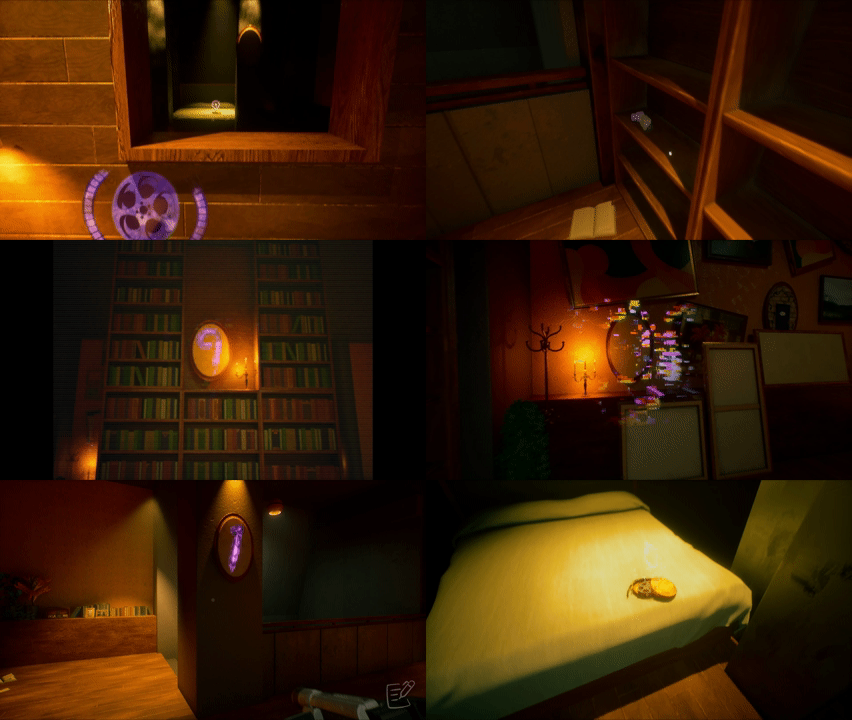
Beat #6 - Mme. Leblanc's Room (Tape 3)
This safe zone shifts the focus toward exploration and puzzle-solving. Through framing, lighting, and environmental composition, the player is guided toward clues that reveal the code required to access the final tape fragment.
Intensity 3/10
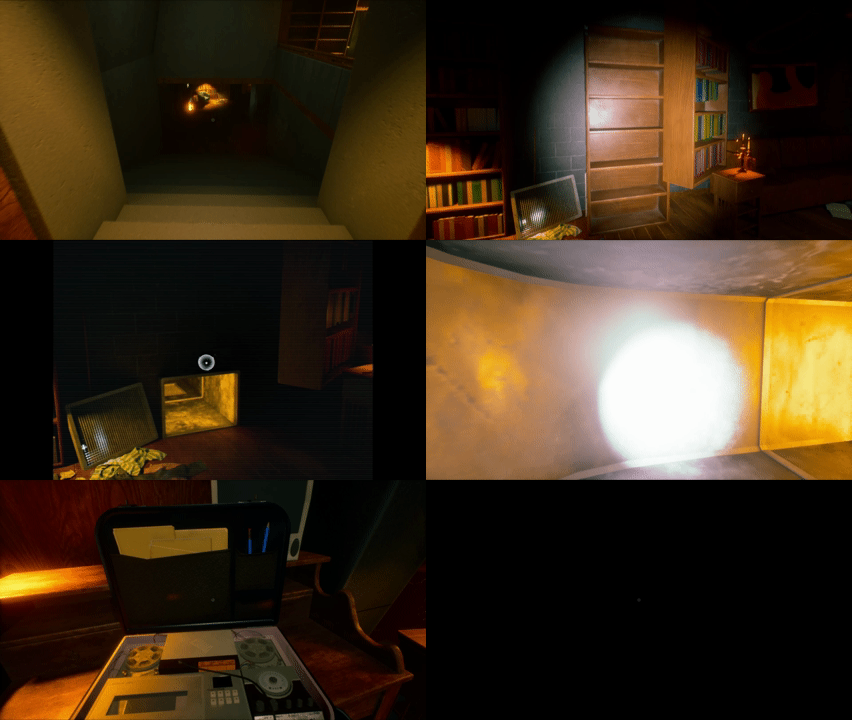
Beat #7 - Safe Room & Tape Assembly
With all tape fragments collected, the players take the stairs down to the boudoir (a previously visited location with the Enquêtrice) and use the camera to reveal a hidden passage. Reaching the Safe Room concludes the level as the tapes are assembled and the player transitions into the Enquêtrice gameplay sequence.
Intensity: 1/10
Level Design Techniques
As the midpoint of Fragments, this level was designed to deliver one of the most intense and memorable gameplay sequences in the experience. My primary goal was to create a constant sense of tension while maintaining player agency through meaningful navigation and stealth choices.
To achieve this, I structured the level around alternating moments of pressure and relief. High-intensity encounters with the Janitor and the Anomaly are followed by safe spaces that allow players to recover, reorient themselves, and absorb environmental storytelling before facing the next challenge. This pacing strategy helps sustain tension throughout the level without overwhelming the player.
Player guidance relies heavily on environmental design rather than explicit instructions. Lighting, framing, item placement, and enemy patrol routes are used to subtly direct players toward objectives while encouraging exploration and observation. The level rewards players who take the time to analyze their surroundings and understand enemy behaviors.
The architecture itself plays an important narrative role. Inspired by Habitat 67, the modular apartment maze creates a feeling of disorientation and repetition that reflects the protagonist's deteriorating mental state. This connection between gameplay, environment, and narrative was a core pillar throughout the design process.
Ultimately, the level aims to blend stealth, exploration, environmental storytelling, and psychological horror into a cohesive experience that serves as the game's dramatic midpoint.
Design Iterations
The development process began with the creation of a modular apartment block inspired by Habitat 67. Establishing this modular kit early allowed me to rapidly prototype layouts and experiment with different player routes, sightlines, and encounter spaces.
As playtesting progressed, I iterated extensively on the layout to improve navigation clarity, pacing, and player agency. Several pathways, room connections, and hiding opportunities were adjusted to create more meaningful choices during stealth encounters while reducing player confusion.
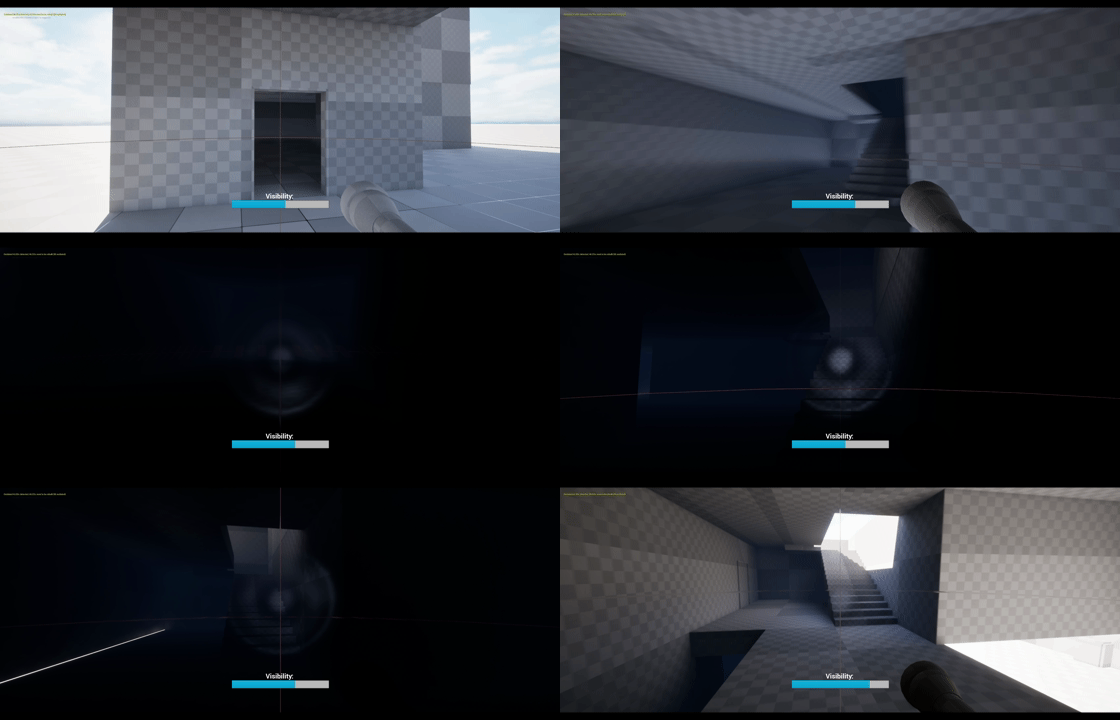
Lighting also underwent multiple revisions. Beyond establishing atmosphere, lighting was used as a primary player guidance tool to direct attention toward objectives, points of interest, and safe routes. Through testing, I refined the placement and intensity of light sources to better support navigation without relying on explicit markers.
Finally, the Anomaly's patrol routes were continuously adjusted to create engaging stealth scenarios. Early versions either restricted player options too heavily or failed to generate sufficient tension. By iterating on patrol timings, movement patterns, and environmental cover, I was able to create encounters that rewarded observation, planning, and adaptation.
These iterations helped align the level's architecture, player guidance, and enemy behaviors with the core design goal of delivering a tense but readable midpoint experience.


